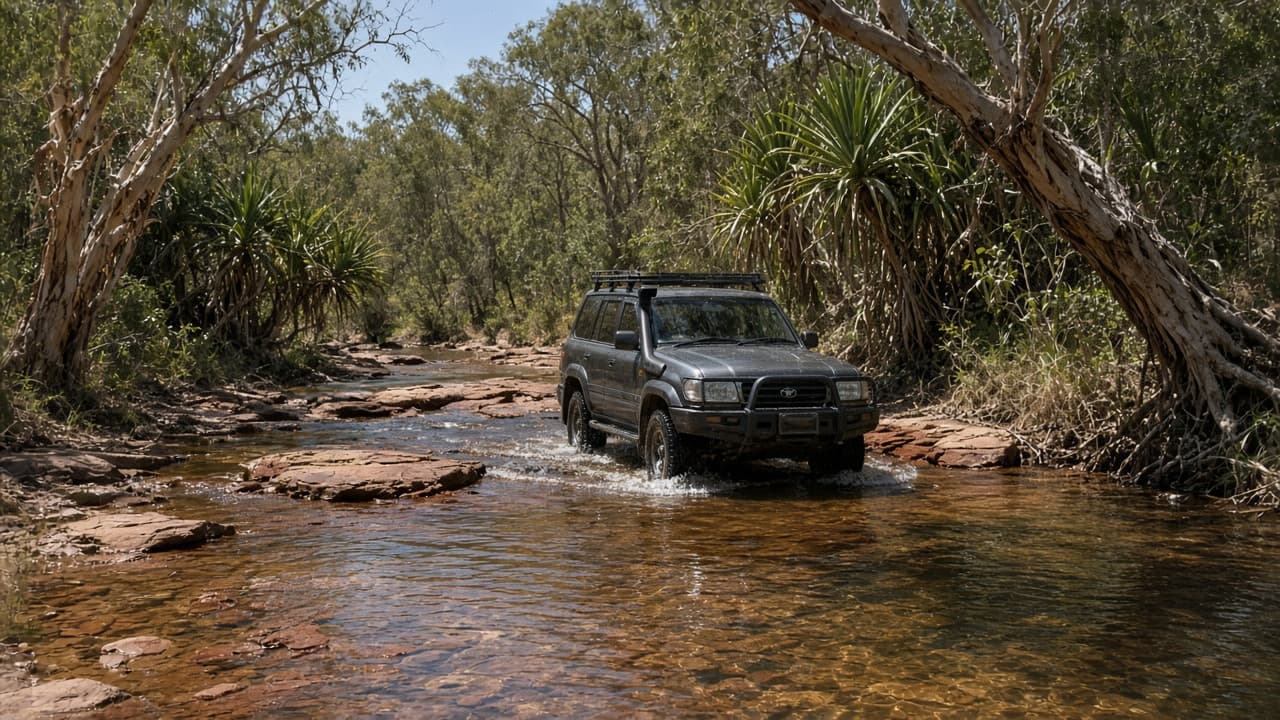
Winching
A winch is a tool you have already used
If the first time you pay out rope is on a salt lake with a drone overhead, you do not have a winch. You have a story waiting to go wrong.
Use a winch safely by practising in a paddock, keeping spectators behind solid objects, using a damper, and stopping if anyone stands on the line. A winch is for solo, boat-ramp, or specific holes — not a substitute for rated points and a second vehicle. Confirm ratings and local rules. We do not rank winches or invent capacities.
Practise
In a paddock
Damper
Every time
Wait
If people linger
When the winch is the honest first tool
The snatch or winch sticky says it: a briefed mate and a kinetic strap cover more Australian “soft shoulder” moments. The winch becomes honest when there is no second vehicle, when a boat ramp is the job, or when a hole will not take a strap without making things worse.
Even then, boards and a calmer line still go first. The winch is not a personality.
The paddock syllabus
- Pay out without bird-nesting because you were impatient.
- Know where the remote lives and whether you can stand in a safe place to use it.
- Place a damper or weighted blanket every time, including “easy” pulls.
- Inspect the line, fairlead, and points in daylight so you recognise damage later.
- Rehearse the spectator sentence until it is boring. Winch spectators thread.
The live recovery
Stop spinning. Walk the exit. Brief everyone. Show the attachment points. If a point is not rated, stop — you are about to invent physics. Move people. Load slowly. Watch the line and the vehicle that should stay still. Stop if a child reappears with a camera.
Synthetic or steel is a maintenance and failure-mode conversation, not a #1 list. Know what you have, how it fails, and how you handle it with gloves.
Pair with the rest of the site
Recovery basics is the parent. Snatch straps is the sibling. Recovery kits is the gear-shaped version. Outback driving reminds you that turning around is still allowed after you spent money on a bumper.
Do not winch for content in the High Country clay. Mitch already wrote that trip report.
What the line is doing while you winch
A winch can drag a vehicle into a worse hole if the exit is wrong. Walk the exit. Clear the line of people and of loose gear. Think about where the vehicle will slide if a point fails. If you cannot describe that in a sentence, you are not ready to pull.
Boat ramps and salt are their own sports: check the ramp, the tide, and whether a strap to a second vehicle is actually available. Do not invent a rating for a rusty fixture.
Maintenance is part of safety
Inspect the line, fairlead, and mounts in daylight at home. Retire damaged gear. Know whether you have synthetic or steel and how you handle a bird’s nest. We will not rank lines. We will say: gloves, and do not pretend a frayed rope is a personality.
After the pull
Lower the load slowly. Check the vehicle and the country. Pack the line so the next person is not inheriting a bird’s nest. Do not leave the damper in the creek. Write the lesson before it becomes a pub story.
Pair with recovery basics, snatch straps, and the winch spectators thread.
A winch day that stays boring
Park where you will not create a second stuck. Chock if the slope asks for it. Gloves on. Remote where you can see the line and the people. Damper on before the first load. Stop if a child reappears. After the vehicle is free, do not celebrate in the hole — move to a place you can pack the line without standing in water.
If that sounds slow, good. Slow is the point. Post the boring version on the recovery board.
A jewellery winch still bolted in the plastic is not a plan. Unwind it at home, learn the remote, and decide whether the job is really a winch job or a snatch strap job with a mate. If you cannot say that out loud, stay on formed roads and read outback driving.
Winch day versus strap day
| Feature | Winch day | Strap day |
|---|---|---|
| People | Often solo or ramp. | Second vehicle, briefed. |
| Practice | Required or it is jewellery. | Required or it is a dart. |
| First move | Still boards and walking. | Still boards and walking. |
| Spectators | Wait, then pull. | Wait, then pull. |
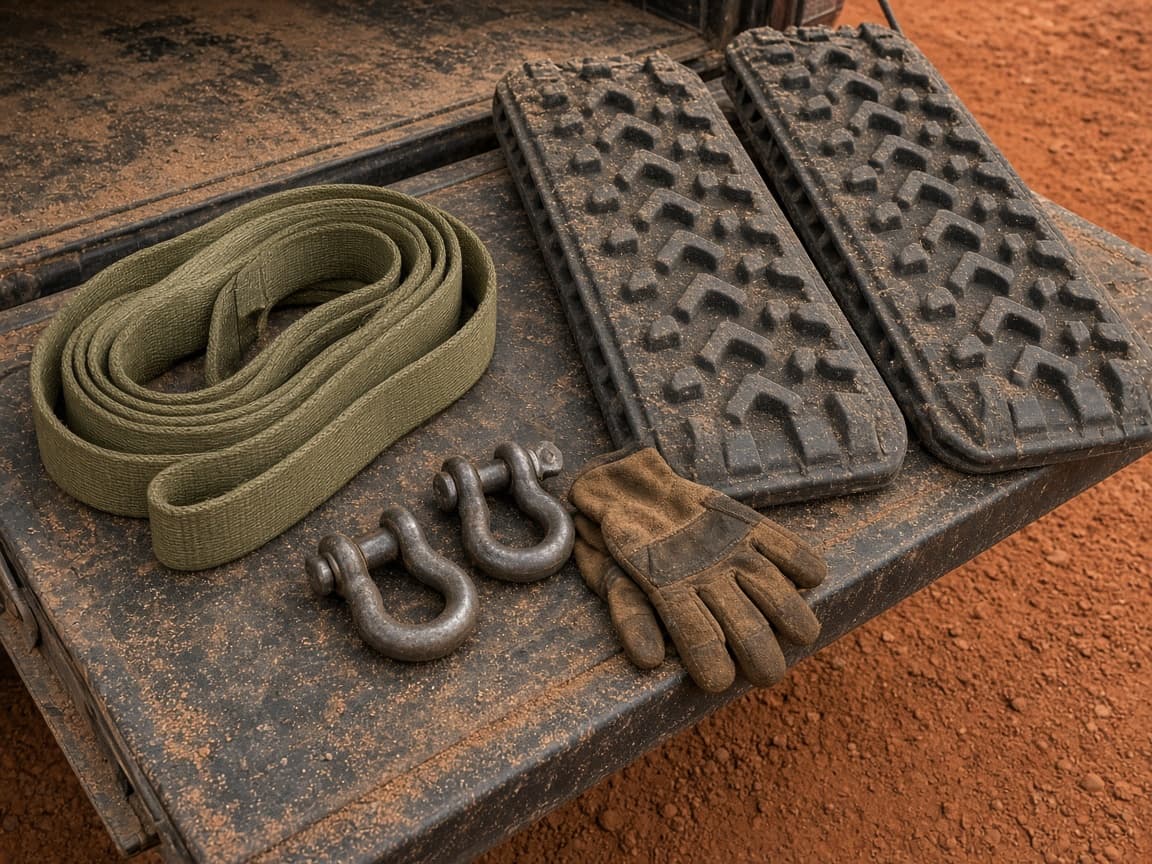
Keep reading
Questions people actually ask
How do I use a winch safely?+
Practise in a paddock, use a damper, attach only to rated points, and do not load the line until spectators are behind something solid.
Is synthetic safer than steel?+
They fail differently. Know the line you have and handle it with gloves. We do not publish a winner.
Can I winch off a tree?+
Only with an appropriate tree protector and a plan that does not kill the tree or the line. If you do not know the gear, do not invent it on the day.
Why do you sound anti-winch?+
We are anti-jewellery. A practised winch is a tool. An unpractised one is a bumper sticker.
Practise where failure is embarrassing.
Then post the paddock lesson, not the drone shot from the blanket.