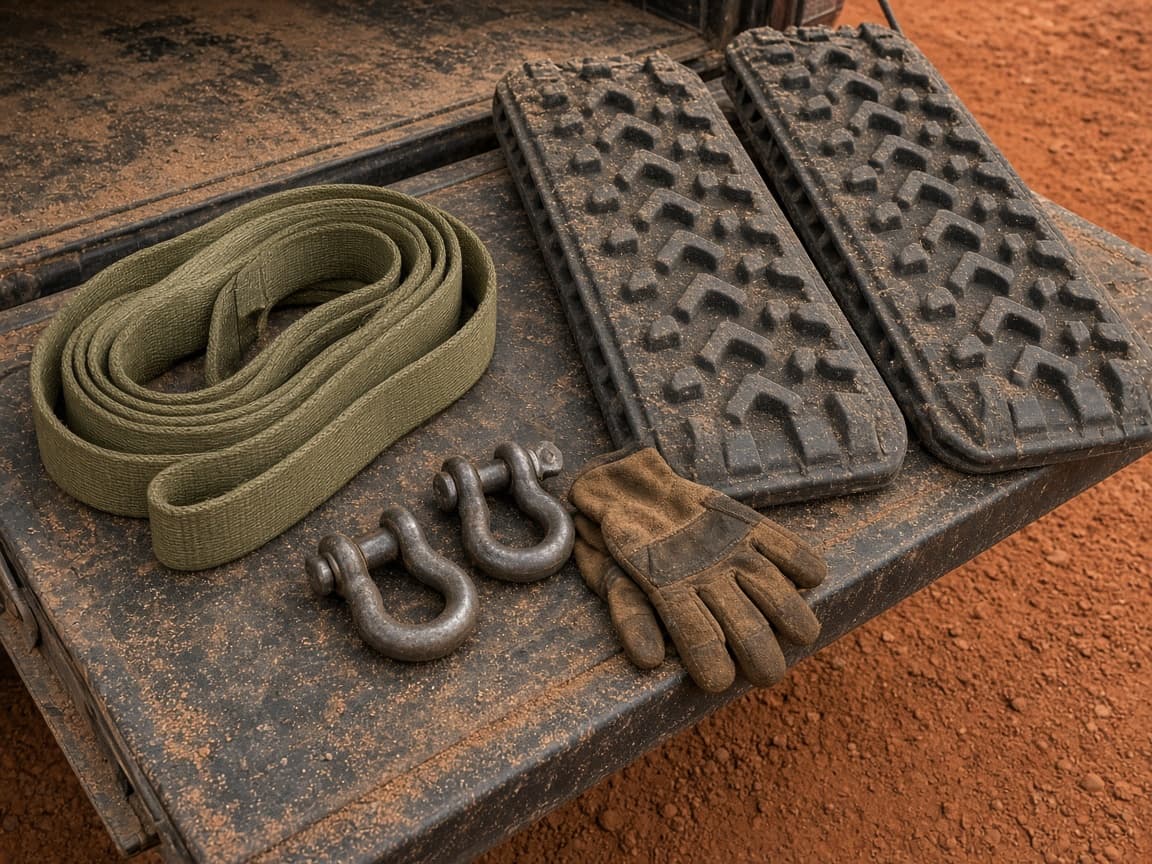
Recovery
Recovery gear that belongs in the vehicle
The first kit is not a winch catalogue. It is a rated place to attach a strap, a way to brief people, and the humility to walk the hole you drove into.
The recovery gear you need for Australian tracks starts with manufacturer-rated recovery points, a kinetic strap used only as designed, recovery boards you can reach, and a habit of moving spectators before anything comes tight. A winch is a later tool for solo or boat-ramp problems, not a substitute for a second vehicle and a calm brief. Confirm ratings on the stamping. Do not invent working loads.
Rated
Points only
Walk
Spectators back
Practise
Before remote
The short kit, without a shopping sermon
If you drive formed Australian dirt, you will eventually choose a line that is softer, wetter, or more rutted than it looked. The honest first kit is:
- Recovery points that are stamped and intended for recovery — not a tow ball, not a tie-down dressed as a hero.
- A kinetic (snatch) strap used with compatible, rated connections, plus a damper or blanket weighted on the line.
- Recovery boards you can actually retrieve while you are already stuck.
- Gloves, a shovel if the country is sand or clay, and a second person who has heard the brief.
- A way to talk — UHF or a shouted plan that is not “she’ll be right”.
That list is also on the snatch strap leaf and the recovery kits gear page. Repeat it until it is boring.
What “rated” means when you are tired
A lashing point is for tying a load. A recovery point is designed for a dynamic or specified recovery load and should say so. If you cannot find a rating, treat the metal as a place to hang a bag, not a place to store kinetic energy.
Hitch receivers are asked to do work they were not born for. Plenty of people have bent a receiver or launched a ball because a weekend looked harmless. If your only “point” is a ball, stop planning remote travel and fix the vehicle. The recovery point ratings thread is the board version of this paragraph.
Boards, straps, and the order of operations
- Stop spinning. A hole you deepen is a hole you own.
- Walk the exit. If you cannot walk it, think twice — the outback driving page uses the same sentence on crossings.
- Try boards and a calmer line before you put energy into a strap.
- If you strap, brief the other driver, show the points, place the damper, and move people.
- If you winch, you have changed sports. Read winching and practise in a paddock.
Soft shackles around paint and around people; steel when the eye is ugly or the fibre history is a shrug. Retire mystery gear that has lived in a hot tray for a decade. The soft vs bow thread is for failure modes, not brands.
Spectators are the recovery
The sentence we want on this site: if it breaks, it will not care that someone wanted a video. Walk people to the far side of a solid object. Hold the remote or the other vehicle until the space is empty. If someone will not move, the rope does not come tight. That delay is a successful recovery.
Children, dogs, and the person with the best camera are the usual volunteers for the worst place to stand. Be rude early. Be polite after.
When a winch is the first tool
Solo remote travel, boat ramps, and some salt or mud holes change the maths. Even then, a winch you have never used is jewellery. Practise paying out, fairlead behaviour, and the damper drill where a failure is embarrassing, not hospital-shaped. See the snatch or winch first sticky.
What we will not specify
We will not invent a working-load number for your bumper. We will not tell you a brand is safest. We will not price a kit. Manufacturer documentation and a reputable fitter beat a stranger on the internet — including this stranger.
Pair this page with travel and vehicles
Beach recoveries are usually pressure and line mistakes — read tyre pressures and beach driving. High Country clay is a turn-around sport — High Country. A Hilux, Ranger, or Cruiser does not change the spectator rule — vehicles.
If you post a recovery photo on the board, say whether the point was rated, whether anyone stood close, and what you would change. That is more useful than a rooster tail.
Australian recoveries that are usually not a winch story
Most weekend stucks we hear about are: a beach shoulder at the wrong tide, a High Country clay pinch after rain, a desert wash that looked shallow, or a city-fringe sand track treated like a hill climb. Boards, pressure, and a second vehicle appear more often than a bumper catalogue.
That is why this page refuses to open with a winch. The beach driving and High Country leaves are the travel twins. The packing list is where boards have to be reachable, not sculptural.
What to put in a recovery bag that is not a product list
Gloves you will actually wear. A damper or a weighted blanket. A shovel if sand or clay is on the plan. A spare rated shackle so one ugly item can be retired. A headlamp for the recovery that happens after you said you would camp earlier. Tape and a marker so you can label a damaged strap “do not use” instead of leaving it in the pile.
We still will not name a shop or a price. The job is the list.
Training that is not a YouTube binge
A club recovery day, a paddock with a known hole, and a mate who will tell you the brief was sloppy. The first remote trip thread is the syllabus we keep repeating. If you cannot find the compressor and the boards without unpacking the kitchen, you did not pack a recovery kit.
After the pull
Check the strap, the points, and the people. Air up if you dumped pressure to get moving. Do not leave webbing offcuts on the track — that is a tread lightly sentence wearing recovery clothes. Write what you would change before the memory becomes a pub story.
If the recovery required a park ranger or a tow from a town, say that on the board without inventing a legal outcome. Other people will pack differently.
First kit versus later kit
| Feature | First honest kit | Later, if the job exists |
|---|---|---|
| Attachment | Stamped recovery points. | Winch-compatible bumper, still rated. |
| Energy | Kinetic strap + damper. | Winch line + damper + practice. |
| Unstuck without drama | Boards, shovel, calmer line. | Same, still first. |
| People | Second vehicle, briefed. | Solo only with a practised winch. |
Keep reading
Questions people actually ask
What recovery gear do I need for Australian tracks?+
Start with rated recovery points, a kinetic strap used as designed, reachable boards, and a spectator brief. Add a winch when you have a solo or boat-ramp job and have practised it.
Is a tow ball a recovery point?+
No. Treat an unrated ball or tie-down as a place to hang a bag, not a place to store kinetic energy.
Should I buy a winch first?+
Usually no. A briefed second vehicle and a rated strap cover more “I chose the soft shoulder” moments. A winch you have never used is jewellery.
How far should spectators stand?+
Far enough that a failed line cannot reach them — behind a solid object, not on the blanket. If they will not move, do not load the line.
Practise the brief before the desert.
Post a paddock lesson on the recovery board. Leave the unrated hitch out of the story.