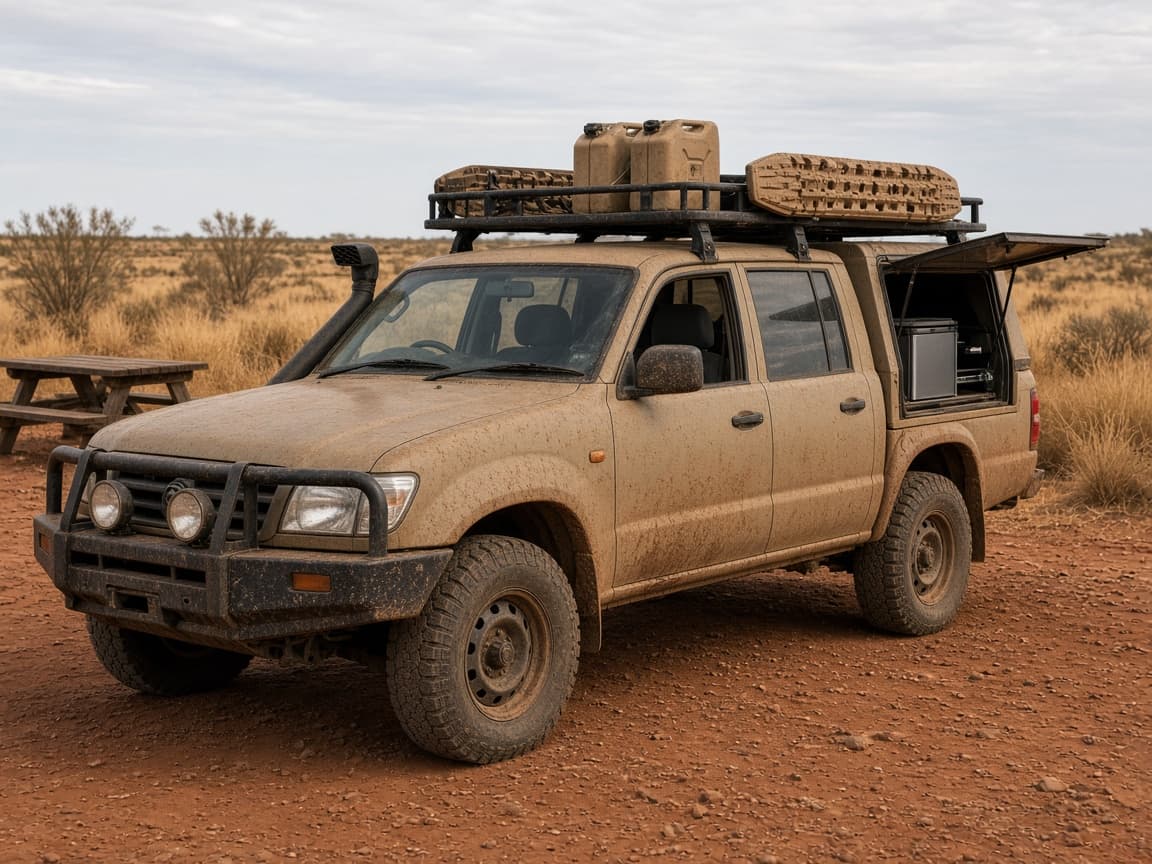
Gear hub
Gear that earns a seat, not a catalogue
Name the job, then the tool. A tidy tray is not a skill. A weekend fridge is often a habit, not a second battery.
Australian 4×4 touring gear should start with a job: a rated recovery point, a radio you have already used, a fridge lid you can keep shut, and lights you have aimed and will dip. A dual battery for a weekend trip is often no — a healthy starter and lid discipline cover many two-night runs. Confirm ratings and local rules. We do not rank products or invent prices.
4
Job-first leaves
Often no
Weekend dual battery
No #1
Product lists
What this hub is for
These pages sit beside the gear board, not instead of it. A thread can tell you that a fridge lid left open at 2 pm cooked a week of meat. A hub should tell you why lid discipline, a reachable recovery kit, and a radio check beat a shopping list.
We write for Australian weekends and Australian weeks: two nights of sausages on a formed forest road, a High Country clay Saturday, a beach run that becomes a tide conversation, and the first remote week where a compressor under camp chairs is not a compressor. We do not write dealer brochures. We do not invent prices, “best” fridges, or a #1 light bar.
If you only open one page before you spend money, make it this one and recovery kits. If you only open one page before a two-night fridge trip, stay here for the dual-battery sentence, then read camping.
Jobs before catalogues
A useful piece of touring kit has a job you can say out loud:
- Keep people away from a strap that might fail — recovery kits and recovery basics.
- Keep food cold without opening the lid every ten minutes — camping.
- Keep three vehicles on the same plan when dust hides the tail lights — comms.
- See a kangaroo early without blinding the oncoming dual-cab — lighting.
- Get home on the tyre you have, not the tyre you wish you had — tyre pressures.
If you cannot name the job, you are collecting. Collecting is how trays get heavy and recoveries get late.
The packing list is the order we pack: water, repair, rated recovery, comms, tired-cook food, then comfort, then the gadget that still has a job. Reverse that list and you will own a light bar and a story about being thirsty.
Dual battery for a weekend: often no
This is the question the dual battery thread keeps asking, and the answer we keep repeating.
Two nights of sausages, a fridge you pre-chilled, and a starter battery that is actually healthy is often enough. Lid discipline matters more than a second battery you have not fused, not vented, and not practised finding in the dark. Five nights with a compressor, a winch you might use, and lights you leave on at camp is a different electrical job. Name the nights and the loads before you name a battery.
What “often no” is not: a dare to flatten a tired starter on a remote week. Test the vehicle you have. If the fridge already kills the start after a Saturday night with the lid flapping, you have a habit problem or a battery problem — fix the habit first, then talk electrics on the vehicles board.
We will not invent an amp-hour law. We will not tell you a brand is safest. We will say: weekend scale is usually habit; week scale is usually a planned second source. Read camping for the lid, and lighting before you leave camp lights on “just in case”.
The four leaves, in the order we send newcomers
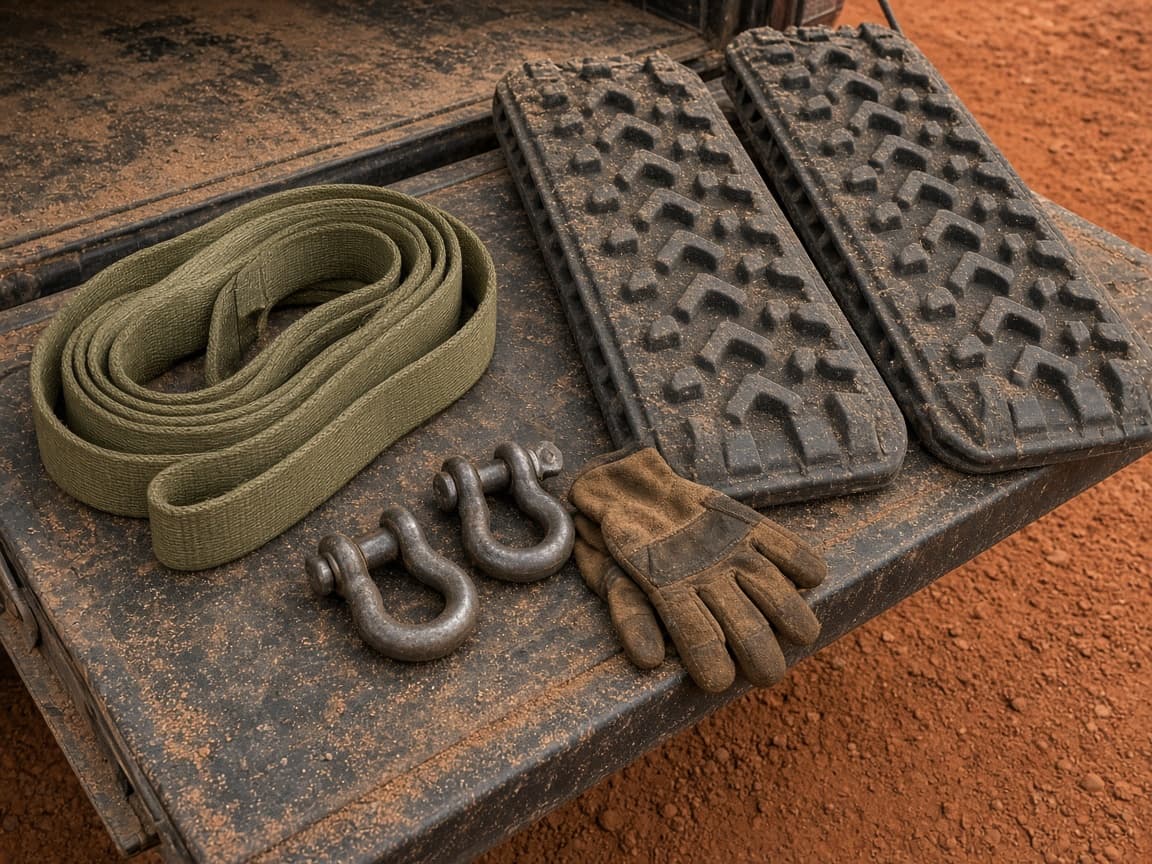
- Recovery kits — rated points first, then a kinetic strap, reachable boards, and a spectator brief. A winch is later.
- Camping — lid discipline, tired-cook food, fire rules, and the weekend battery sentence again.
- Comms — UHF convoy etiquette you agree in the car park, plus a paper plan if the phone dies.
- Lighting — aim, dip for dust and oncoming, and camp before you need headlights you have not aimed.
Sibling reading lives in guides, vehicles, and travel. The buying used page is the inspection spine when a “fully set up” advert is really a tray of unrated jewellery.
Recovery is not a shopping category
The first kit is not a winch catalogue. It is a stamped place to attach a strap, a way to brief people, and boards you can retrieve while you are already stuck. If your only “point” is a tow ball, stop planning remote travel and fix the vehicle. That sentence also lives on recovery basics and the ratings thread.
Boards that live on the roof as ornaments and boards that live under a drawer you cannot open in a bog are the same failure: they do not get used. The boards thread is for mounts and habits, not a brand ladder.
A LandCruiser or Hilux does not change the spectator rule. Clay in the High Country does not change it. A beach hole on K’gari does not change it. If someone will not move, the rope does not come tight.
Camping is lid discipline dressed as kit
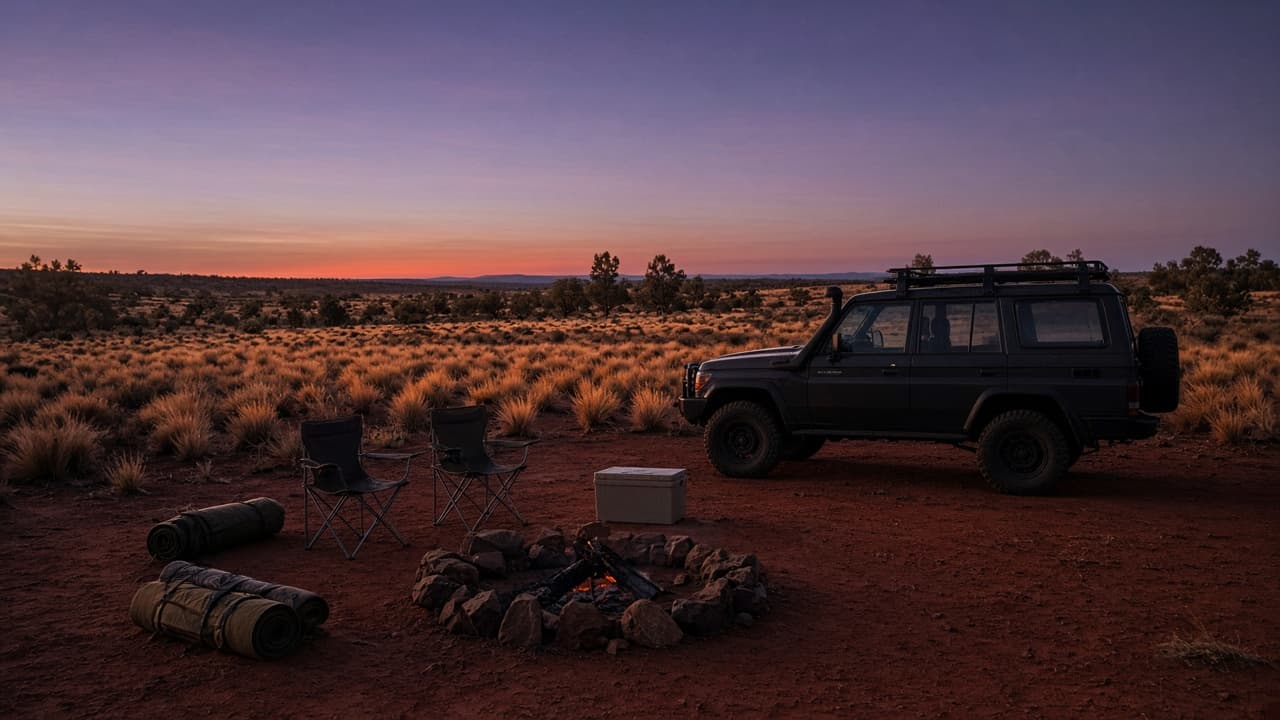
A fridge is the touring default for meat and heat. An esky still wins when the fridge is the broken part and the menu is simple. Either way, the lid is the sport. Every open is a decision. See fridge vs ice and the camping leaf.
Fire rules are local. Ash and micro-rubbish are your problem. Tread lightly is a driving skill that continues after you park. The travel hub keeps seasonal and park-page caution; this hub keeps the kit that does not invent a right to a fire.
Kitchen theatre is how people reverse the packing order. If you cannot find the compressor because the camp chairs won, you did not pack. You stored.
Comms is a two-minute brief, not a radio shrine
Ad-hoc three-car weekends fail in the car park, not on the track. Agree a simplex channel, a convoy order, a last-vehicle call, and what you do when someone drops out of range. Confirm current ACMA allocations before you sit on a channel that is not yours to hog. The UHF etiquette thread wants the two-minute brief; comms is the textbook.
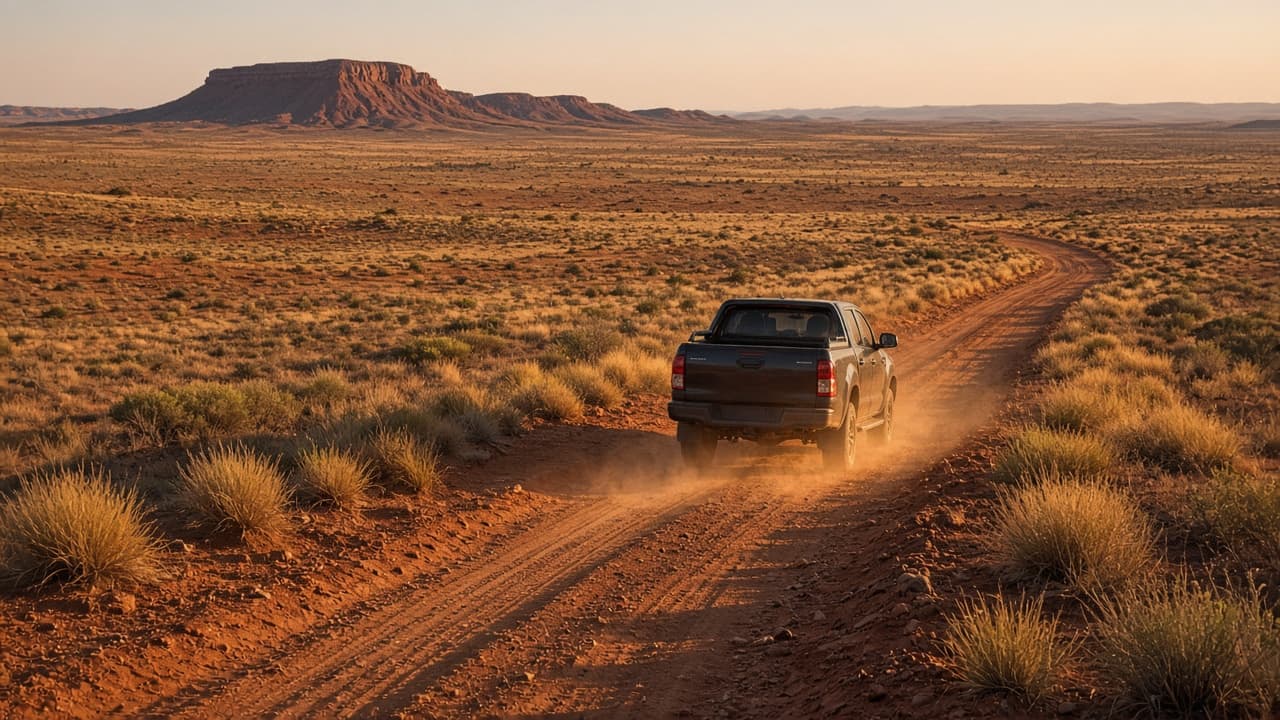
A radio you have never keyed is jewellery, same as a winch you have never paid out. Do the radio check before the bitumen ends — outback driving uses the same sentence.
Lighting is aim and dip, not a bar on a video
Night kangaroos are a pacing and rest conversation before they are a lighting conversation. Dip for dust and for oncoming. A bar that becomes glare on corrugations is a switch you should have practised finding. Read lighting and the driving lights thread so we do not rank products.
Camp earlier if you have not aimed the lights. That is not poetry. That is how you avoid inventing a night you did not pack for.
How gear talk should work on the board
Post the messy version on the board. Link the calm version here. If your thread invents a price or a ranking, the crew will ask you to rewrite it. If your thread teaches a job, a failure mode, or a habit — lid shut, spectators walked, channel agreed — we will keep it even if we never sticky the post.
A useful internal-link habit: every fridge argument should point at camping and the weekend battery sentence. Every recovery photo should point at recovery kits and recovery basics. Every night-driving yarn should point at lighting. Every “we lost the tail vehicle” story should point at comms.
If money is in the air because someone is selling a “touring setup”, point at buying used and the classifieds sticky. We are not a shopfront.
What we will not do on a gear page
We will not tell you a fridge is “the best”. We will not publish a #1 recovery board, radio, or light bar. We will not invent a working-load number for your bumper or an amp-hour number for your weekend. We will not pretend a 2019 Facebook pin is a permit. We will not give electrical, mechanical, or legal advice. If a sentence wants to become a product sermon, it belongs in the bin.
Manufacturer documentation, a reputable fitter, and a club skills night beat a stranger on the internet — including this stranger. If you want a club to stand behind the vehicle while you learn, do that first. Then come back and post.
Practice before the desert
A paddock syllabus we keep repeating in first remote trip threads: radio check, air down and air up, walk a crossing, place boards, brief a strap with a damper, plug a tyre, and rehearse the sentence “we turn around”. That list is more valuable than a light bar you have not aimed and a second battery you have not needed.
The country does not care that the tray is tidy. The guides hub keeps the skills. This hub keeps the jobs. The board keeps the lived notes. Use all three.
Job versus catalogue
| Feature | Earns a seat | Audition later |
|---|---|---|
| Electrics | Weekend: healthy starter + lid habit. Week: planned second source. | A dual battery because the brochure said touring. |
| Recovery | Rated points, reachable boards, briefed strap. | A winch you have never paid out. |
| Camp | Lid discipline and tired-cook food. | Kitchen theatre that hides the compressor. |
| Night | Aimed lights you will dip. | A bar you bought for the video. |
Keep reading
Questions people actually ask
Do I need a dual battery for weekend 4×4 trips?+
Often no. A healthy starter battery, a pre-chilled fridge, and lid discipline cover many two-night trips. Longer, hotter, compressor-heavy weeks are a different electrical job.
What 4×4 gear should I buy first in Australia?+
Start with rated recovery points, a kinetic strap, reachable boards, a radio you have used, and tyre repair you have practised. Gadgets come after those jobs exist.
Do you rank fridges, radios, or light bars?+
No. We talk about jobs, habits, and failure modes. We do not publish #1 product lists or invent prices.
Where should I discuss mounts and failure modes?+
On the gear board, with a link back to the calm page. Leave prices and rankings in the bin.
Name the job. Then post the dusty version.
If a page changed how you pack or recover, say so on the board — with the habit, not a secret affiliate link.