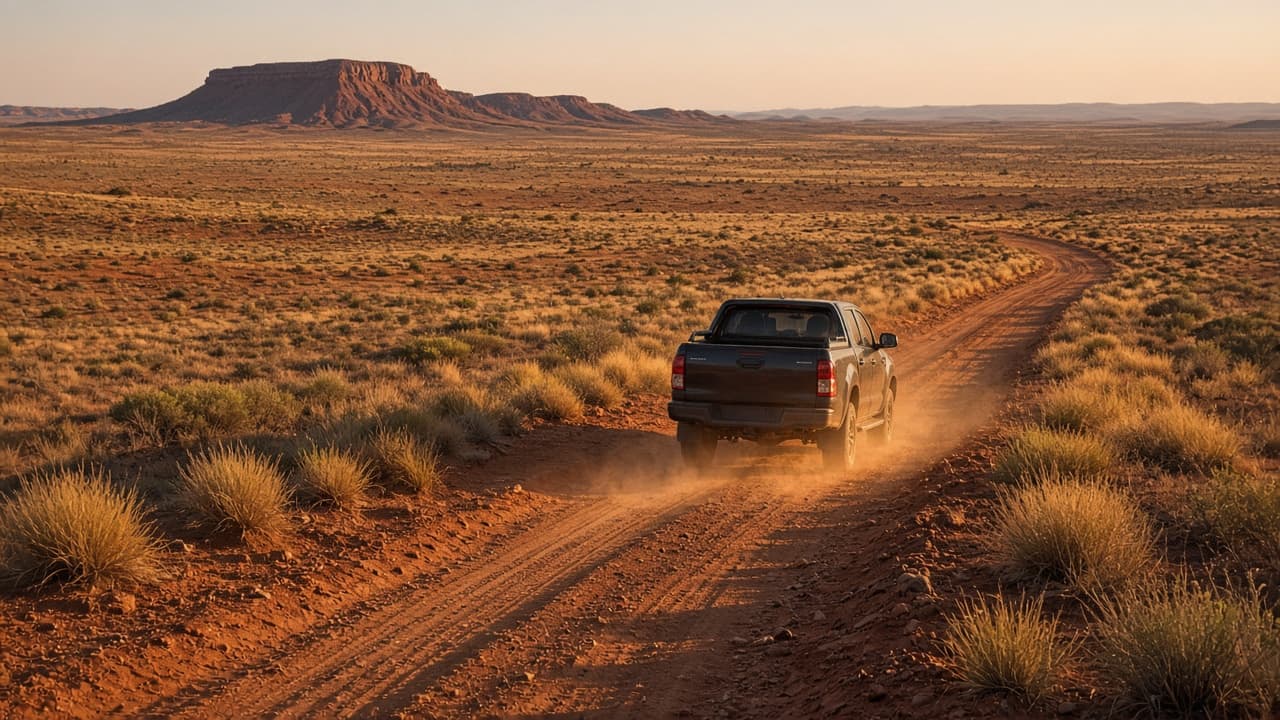
Comms
Agree the radio before the dust
Ad-hoc convoys fail in the car park: no channel, no last-vehicle call, someone on a duplex out of habit, squelch so high they hear nothing.
UHF convoy etiquette in Australia starts in the car park: agree a legal simplex channel, a convoy order, a last-vehicle call, and what you do when someone drops out of range. Do a radio check before the bitumen ends. Carry a paper plan if the phone dies. Confirm current ACMA allocations. We do not rank radios or invent prices.
Car park
Channel plan
Check
Before dirt
Paper
If phones die
The two-minute brief
The UHF etiquette thread asked for a two-minute brief. This is the textbook version.
In the car park, out loud:
- Which simplex channel you will use, and which channel you will not sit on because it is someone else’s job — highway chatter, emergency duplex, or a repeater you do not understand.
- Convoy order and a last-vehicle call so the lead knows the tail still exists.
- What “wait” means: a named spot, not “somewhere in the dust”.
- What you do when a radio goes quiet: stop at the last agreed place, not invent a new track to “find them”.
- Who has a paper map, a written meeting point, and a time to turn around.
Confirm current ACMA channel allocations and local rules before you copy a memory of “we always use this one”. Allocations and etiquette change. A pin in a group chat is not a licence.
Do not invent a legal outcome from this page. If you do not know whether a channel is simplex, duplex, or reserved, look it up — then keep the convoy short and polite.
Emergency duplex exists so someone in trouble can be heard. Sitting on it for convoy banter is how you become the problem the channel was meant to solve. Repeater channels are a different sport: if you do not know the offset, the courtesy tone, or whether you are licensed and local enough to use that machine, stay simplex with your mates. Highway chatter has a job that is not your three-car sausage weekend. Be a guest on shared channels the same way you are a guest on station tracks.
Radio check before the bitumen ends
A radio you have never keyed is jewellery, same as a winch you have never paid out. Outback driving puts the radio check in the daily order of operations. Do it while you can still walk back to the vehicle that is muted, on the wrong channel, or hiding behind a squelch so high it hears nothing.
Squelch, volume, and the microphone you can find with gloves on are part of the kit. A beautiful head unit you cannot operate in corrugations is not comms. It is interior design.
The first remote trip syllabus includes the radio check beside air-down, boards, and the turn-around sentence. Practise it on a local NSW forest afternoon before you practise it in the NT.
Handheld versus in-dash is a job, not a #1 list. A handheld you can take to the hole while you place boards is a different tool from a set that stays in the cab with the convoy. Some weekends want both. We will not rank them. We will ask whether the battery is charged, the channel is agreed, and the person at the hole can still talk to the person in the other vehicle. That is comms. A pretty faceplate is not.
Phones die. Paper does not.
Coverage is a rumour on a lot of Australian dirt. A shared live location is a gift when it works and a liability when three people believe it still works. Write the meeting point. Write the turn-around time. Write the park page you checked. The packing list puts comms and a paper plan above kitchen theatre.
If you are travelling stations, a pin is not permission — NT travel and tread lightly. The radio is for the convoy you were invited onto, not for announcing yourself as a guest the station did not ask for.
Convoy manners on the track
Keep calls short. Say who you are in the convoy, where you are, and what you need. Dust is not the time for a build story. Dip lights for the vehicle you are talking to — lighting. If you stop, say so before the tail climbs into your bumper.
Recovery on the radio is still recovery: rated points, a brief, spectators walked. Do not narrate a strap from the blanket. Read recovery kits and recovery basics before the hole, not during it.
Tread lightly applies to chatter as well as lines. A convoy that braids a corner so everyone “keeps eyes on” is how a formed road becomes a trench. Slow down. Wait. Use the radio instead of a new scar.
What we will not do
We will not rank handhelds, in-dash sets, or aerials. We will not invent a “best” wattage. We will not publish a #1 radio. We will not pretend this page is an ACMA handbook. Manufacturer manuals and the current official allocation table beat a stranger on the internet.
If you post comms on the gear board, post the brief that failed or worked — channel confusion, a last-vehicle call that saved a split, a phone that died. Leave the shopping sermon out. If you are buying a used vehicle because it “has a radio”, inspect the rest of the story on buying used.
The board is itself a comms tool: trip reports should name the park page and the radio plan, not a secret channel cult. Post the two-minute brief you actually used.
Car-park brief versus hope
| Feature | Brief | Hope |
|---|---|---|
| Channel | Agreed simplex, allocations checked. | Someone stayed on 40; someone used duplex by habit. |
| Order | Lead, middle, last-vehicle call. | Dust, then silence, then a split. |
| Check | Keyed before the bitumen ends. | First test is a bog with gloves on. |
| Backup | Paper meeting point and time. | A live pin that died at the range line. |
Keep reading
Questions people actually ask
What UHF channel should a 4×4 convoy use in Australia?+
Agree a legal simplex channel in the car park and confirm current ACMA allocations. Do not sit on emergency duplex or a repeater you do not understand. We do not publish a single magic channel.
What is UHF convoy etiquette?+
Agree channel, order, last-vehicle calls, and a wait point before you roll. Keep calls short. Radio-check before the dirt. Carry a paper backup if phones die.
Do I need a UHF for a weekend trip?+
If there are two or more vehicles, yes — or another plan you have actually tested. A phone is not a plan on a lot of Australian dirt.
Which UHF radio is best?+
We do not rank radios or invent prices. We ask whether you can key it in dust, agree a channel, and brief the convoy.
Do the two-minute brief in the car park.
Then post the call that saved a split — not a #1 aerial.