LandCruiser
A Cruiser is a job, not a personality
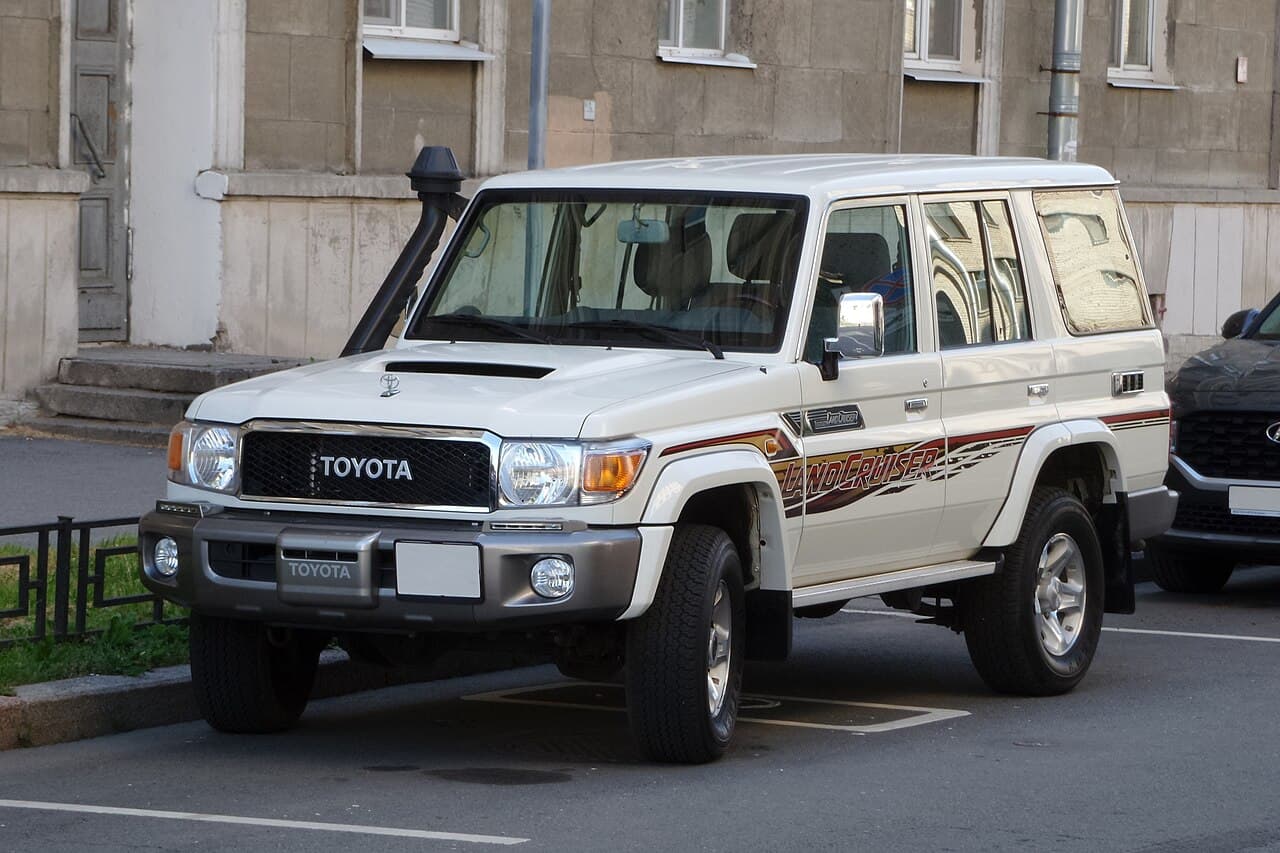
Toyota Land Cruiser 70-series wagon — Alekc2m, Wikimedia Commons, CC BY-SA 4.0.
76 and 79 still go to work. 80, 100 and 200 still tour as wagons. None of them walk a crossing for you, and none of them win a Patrol argument by existing.
A Toyota LandCruiser in Australia is a used touring and work platform — 76 and 79 as wagon and tray tools, 80, 100 and 200 as family wagons — not a ranking or a permit. Choose the body that matches seats and load, then inspect bushes, rust, and recovery points after a life on corrugations. The Patrol question is answered by the example and the job, not the badge. Confirm manufacturer ratings and a parks page before you copy a setup.
76/79
Work-tourers
80–200
Wagon talk
Job
Beats the badge
High level, on purpose
This page will not become a year-by-year encyclopaedia. Toyota’s LandCruiser name in Australia covers work utes and wagons that people actually take on corrugations, beaches, and formed remote roads — and that people also leave in a quarry car park. We talk 76, 79, 80, 100 and 200 as used objects with jobs. We do not invent a “best year”. We do not publish prices. We do not treat a lift as a personality.
If you want the lived wagon-versus-tray argument, the board already has 76 versus 79 for touring. If you want the inspection spine that applies to every badge, use buying used. If you want skills, start at the guides hub.
76 and 79: work that learned to tour
The 70-series conversation Australians actually have is not a brochure comparison. It is drawer length, who sits in the back, and how a wagon versus a tray behaves after a week of chatter.
A 76 is a wagon-shaped lockable interior: seats, a door that is not a canopy latch, and a cabin that can be a week of clothes and recovery boards without living under a tarp. A 79 is a tray conversation — single or dual cab — that becomes a tourer when a canopy, drawers, and water are honest about mass. Plenty of people have turned a 79 into the 76 they thought they wanted, then discovered the canopy has its own rattles, dust paths, and mounting loads.
Neither body is “the one”. Ask who travels, what must stay dry, and whether you will live with a tray’s flexibility or a wagon’s interior. Then look at the example: cracked mounts, weeping shocks, a tailshaft angle after a lift, and recovery points that are stamped for recovery rather than guessed. Recovery basics still applies when the badge is loud.
A 78 troop carrier exists in the same family as a different seating and window conversation. We mention it so a classifieds scroll does not surprise you. We will not pretend it is a secret third winner.
80, 100 and 200: wagons that did the kilometres
The 80 is the coil-sprung wagon a generation of Australians took touring when “the Cruiser” meant a lockable interior and a live-axle conversation. Used examples are now old metal. Inspect them as old metal: rust, cooling, steering, and whether the interior has been a camper for twenty summers.
The 100 is where people start arguing independent front suspension versus a live axle as if that argument settles a desert. It does not. It changes how you inspect the front end, how a lift is discussed with a fitter, and what a week of corrugations might wear. We will not declare a winner. We will say: read the service history, drive a dirt road that is not a car park, and treat clunks as information.
The 200 is the later wagon many families actually tour in — seats, air-conditioning that people rely on, and a used market that still attracts accessory theatre. Accessory theatre is not a service history. Look past the fridge slide to bushes, cooling, and whether anyone can show you the vehicle being used as a vehicle.
Other badges and later wagons exist. If they are not 76/79/80/100/200, this page is still not a catalogue. Ask the same job questions and go to buying used.
LandCruiser versus Patrol, answered carefully
This is the question that fills vehicles and mods. Here is the careful version.
Neither platform is a fact about your character. Nissan’s Patrol — especially GQ and GU wagons and utes — has been an Australian touring and work tool for as long as most of us have been reading boards. Toyota’s LandCruiser has been the same. People reach for a Cruiser because parts desks in some towns are used to the badge, because a family already knows one, or because a station already has one. People reach for a Patrol because the used example in front of them is tidier, because a coil wagon suits the seats they have, or because they are not buying a grille.
A tidy Patrol that matches the job will tour more honestly than a tired Cruiser bought so a thread will nod. A tidy Cruiser that matches the job will tour more honestly than a neglected GU bought so a thread will argue. Condition, rust, bushes after corrugations, cooling, and a service history you can read will decide more kilometres than a badge sermon.
Parts access is a local question. Ask the independent in the town you actually live in what they see, what they stock, and what they refuse. Do not treat a 2011 forum pin as a specification. Do not invent a reliability ranking. We will not do it for you.
If the argument is really about wagon versus tray, stay in that argument. A GU wagon versus a 76 is a different sentence from a GQ ute versus a 79. If the argument is really about money, leave the number off this site and go to buying used.
Corrugations, load, and the unglamorous list
A week of Australian chatter cares about:
- Shock bushes and steering play you can feel on a formed road, not only in a car park.
- Canopy or wagon mounts that have already started to crack or elongate.
- A fridge and drawers that are secured for chatter, not for a driveway photo.
- Tyre pressures as a band you then prove — tyre pressures.
- Speed. Slowing down is still a vehicle modification.
The 33 versus 35 on a 79 thread is for gearing, rubbing, and honesty — not a #1 size. Taller tyres change speedo, gearing, and how casually you pick a line. We will not invent a safe diameter.
Beside Hilux, wagons, and the rest of the hub
If the classifieds tab moved to a dual-cab, read Hilux for the “enough” sentence, and Ranger or Colorado for service and tray questions. A Pajero is the historical family-wagon conversation. A Wrangler is a worth-it question for a different week. The vehicles hub is the index.
Skills still outrank the 70-series myth
A LandCruiser can drown in a hole you did not walk. It can overheat on a long climb if cooling was neglected. It can throw a strap from an unrated hitch like any other tray. Read outback driving and recovery basics as if the badge were humble.
Beach weeks are still tide, permit, and pressure weeks — travel and the beach leaf when you get there. High Country clay is still a turn-around sport. Northern wet season is still someone else’s helicopter if you guess.
Used-buy notes that are not a price
See the vehicle cold if you can. Look at the chassis where a 70-series lives in wet grass and where a wagon lives in coastal air. Ask for records that are not only barwork invoices. Sit in the seats you will actually use. Operate every door and canopy latch after you imagine dust. Check that recovery points exist and are intended for recovery.
Take a knowledgeable friend or a pre-purchase inspection from someone who is not selling the vehicle. We are not that someone. We are not a workshop. We are not a dealer.
Then post what you learned on the board without the asking price. The next reader needs the wear, not the theatre.
76 wagon versus 79 tray
| Feature | 76 wagon | 79 tray and canopy |
|---|---|---|
| Interior | Lockable wagon space, factory doors. | Canopy and drawers you must inspect as extra mass. |
| Seats | Wagon seating is the point of the body. | Dual-cab 79 if people are the point; single-cab if they are not. |
| Corrugations | Wagon rattles and dust paths of its own. | Canopy mounts, latches, and tray flex. |
| Job test | Who sits in the back on a week of dirt. | What must stay dry, and what you will leave home. |
Keep reading
Questions people actually ask
LandCruiser or Patrol — which is better in Australia?+
Neither is better as a moral fact. A tidy example that matches the job and a readable service history will tour more honestly than a tired hero bought for the badge. Compare the vehicle in front of you, parts access in your town, and wagon versus tray — then inspect it.
76 or 79 for touring?+
Choose the body that matches seats and what must stay dry. A 76 is a wagon interior; a 79 is a tray that becomes a tourer only if the canopy and load are honest. Neither is “the one”.
Do I need a 70-series for remote Australia?+
No. Many formed remote roads are driven in dual-cabs and other wagons by people who pick lines and turn around. A 70-series is a used work-tourer, not a permit.
What should I inspect on a used LandCruiser?+
See it cold, look for rust and oil stories, drive corrugations if you can, and treat accessory invoices as theatre until bushes, cooling, and recovery points are honest. Use the buying-used page; we do not invent prices.
Inspect the example, not the myth.
Post 76 versus 79 notes as wear and seating, not as a winner. Leave prices off the thread.