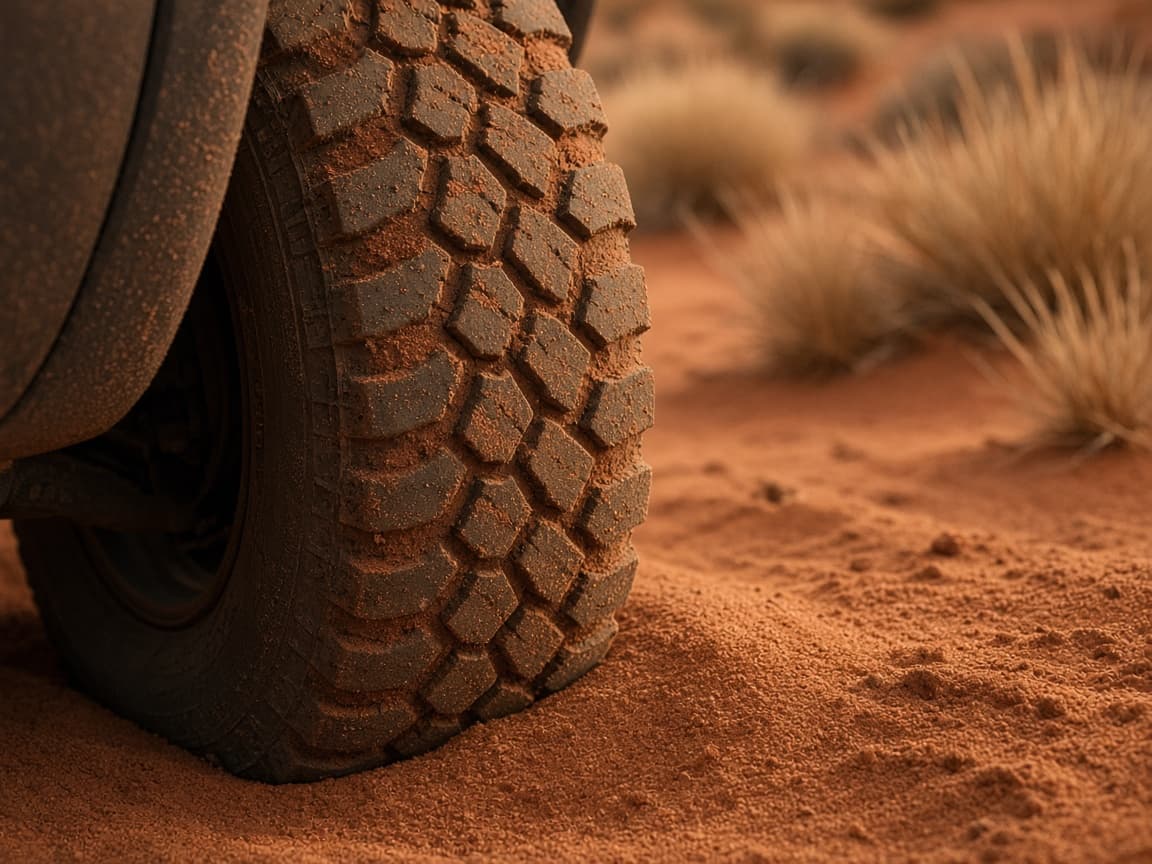
Tyres
Pressures are a conversation, not a law
Write a starting band on the visor. Walk the first twenty metres. Air up before the bitumen. That is the whole sport, dressed in more words.
Correct beach and track tyre pressures in Australia are starting bands you then prove on the surface in front of you, not a single PSI copied from a video. Many dual-cab drivers begin lower on sand than on gravel, then adjust after walking the first metres. Reinflate before highway speeds. Load, tyre construction, and temperature change the number — confirm with the tyre maker and your own gauge.
Band
Not a single PSI
Walk
The first metres
Air up
Before bitumen
Why we refuse a magic number
A 33-inch all-terrain on a lightly loaded 76 at dawn is not a 35-inch mud-terrain on a 79 with a full canopy at 3 pm. Sand that is hard at the bottom of a tide is not the shoulder near the wash. Corrugations that look like a washboard at 80 km/h are a different conversation at 40.
So this page gives starting bands and habits, not a tablet of law. If a stranger on the internet — including us — gives you one number for every beach in Australia, they are entertaining you.
Habits that matter more than the first gauge reading
- Carry a gauge you trust and a compressor you can find in the dark.
- Write “air up before bitumen” on the visor. Desert brain is real. Beach brain is real.
- Walk the first soft patch. A local pointing at the firmer line is not an insult.
- Slow down before you dump another few PSI. Speed plus powder rattles vehicles to pieces.
- Reinflate for rocks after sand. A soft tyre on a sharp approach is a different risk.
The beach PSI thread is where people write their visor cards. The Simpson powder thread is where they admit they slowed down first.
Surfaces, in Australian English
Highway and good gravel. Stay near the vehicle and tyre maker’s touring recommendation. We will not invent one. If you do not know it, you are not ready to experiment in a desert.
Corrugations. Pressure is only one lever. Slowing down is the other. A slightly lower touring pressure can help the tyre envelop sharp chatter, but a sloppy, under-inflated tyre on a loaded wagon can overheat. Stop and feel the sidewall if the day is long and hot.
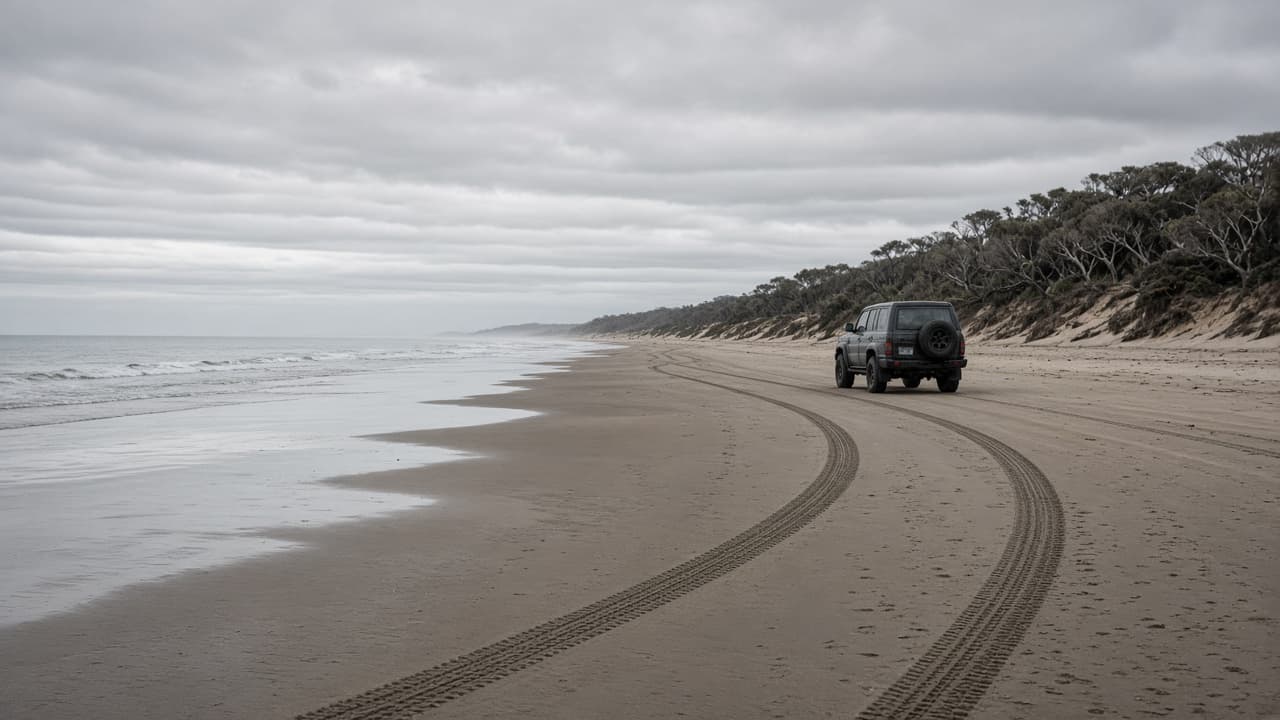
Sand and beach. Drivers commonly start lower than touring pressure so the footprint grows, then they walk the sand. Low tide on a packed beach is not a licence to stay at sand pressures on the inland access track. K’gari, Inskip, Peron, and a suburban sand track are not the same classroom — but the walk-first habit is.
Rock and sharp shale. Air up toward touring before you treat a tyre like a balloon against a blade.
Repair is part of pressure
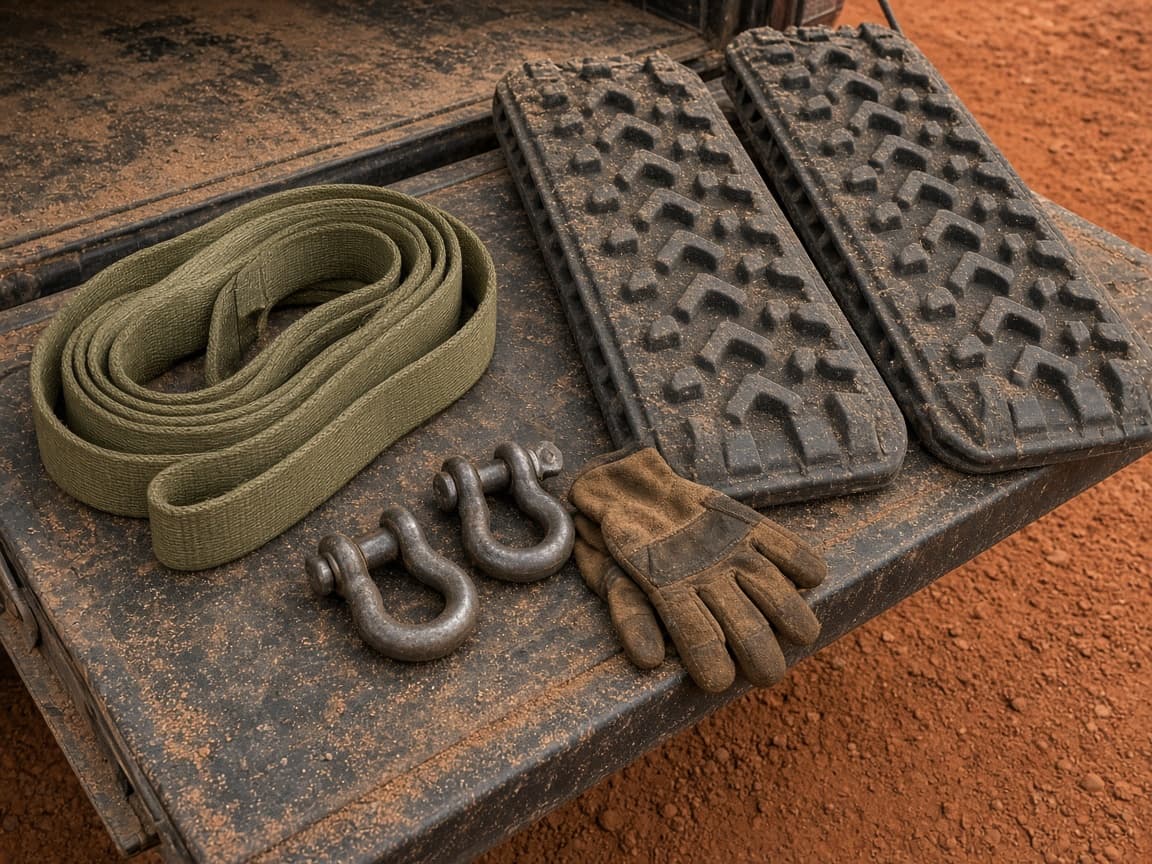
A week away from a tyre shop wants plugs you have practised, a second spare you resented packing, and gloves. See tyre repair minimums and the packing list. A compressor that lives under a heap of camp chairs is not a compressor.
Pair with vehicles and travel
LandCruiser and Hilux pages talk platforms, not PSI commandments. Beach driving is the tide and permit twin of this page. Outback driving is the pacing twin.
If you post pressures on the board, post the load, the tyre size, the surface, and whether you walked it. Leave “this is the only number” in the bin.
Starting bands people actually write down
We still will not publish a tablet of PSI. What we will say is how Australians talk about the job:
- Touring and good gravel stay near the maker’s recommendation. If you do not know it, look it up before the desert, not in the desert.
- Sand and packed beach usually start lower so the footprint grows. Then you walk. Then you adjust. Then you air up before the inland access road turns to rock or bitumen.
- Corrugations often want slower speed before they want another dump of air. Powder plus speed is how you rattle mounts and fillings.
- After a long hot day, stop and feel the tyre. A morning number is not a 3 pm number.
The beach PSI thread and Simpson powder thread are the lived versions. Quote them, then add your load.
Tools that make pressure a habit
A gauge you trust more than a service-station fountain. A compressor you can find in the dark — write the location on the visor next to “air up”. Valve caps that do not vanish in red dust. A second spare if the week is far from a shop. Plugs you have practised on a wreck tyre at home, not for the first time in rain.
See tyre repair minimums and the packing list. A 35-inch tyre without a practised plug is a fashion choice.
Beaches, parks, and the law we will not invent
Vehicle access on K’gari, mainland tidal beaches, and island parks is a permit and a park-page conversation. This pressure page does not replace beach driving or QPWS / local council rules. If a beach is closed to vehicles, your perfect PSI does not matter.
Vehicles and gearing honesty
Taller rubber changes speedo, gearing, and how lazily you pick a line. The 33 vs 35 on a 79 thread is the honesty version. The LandCruiser and Hilux hubs refuse to crown a size.
If you changed size, treat the first remote week as a test of the driver, not a trophy of the tyre.
Levers on a soft surface
| Feature | Do this first | Then consider |
|---|---|---|
| Information | Walk the line, read the tide or park page. | Copy a video PSI. |
| Speed | Slow down. | Dump pressure to keep speed. |
| After sand | Air up before rock or bitumen. | Leave it soft because it felt nice. |
| Heat | Stop and feel the tyre on long corrugations. | Assume the morning number still holds. |
Keep reading
Questions people actually ask
What is the correct tyre pressure for beach driving?+
There is no single correct PSI. Start lower than touring pressure, walk the first metres, and adjust for load, tyre, and tide. Reinflate before highway speeds.
Should I use the same pressure on the Simpson as on K’gari?+
No. Powdered corrugations, dunes, and a packed beach are different surfaces. Use starting bands, then prove them on the day.
When do I air up?+
Before bitumen and before sharp rock. Write it on the visor so desert brain cannot hide the compressor.
Which tyre is best?+
We do not rank tyres. We talk about load, repair kit, and honesty about gearing if you go taller.
Write the band on the visor.
Then post what the sand actually did. The board wants ranges and habits, not a magic number.