Pajero
A wagon that already did the kilometres
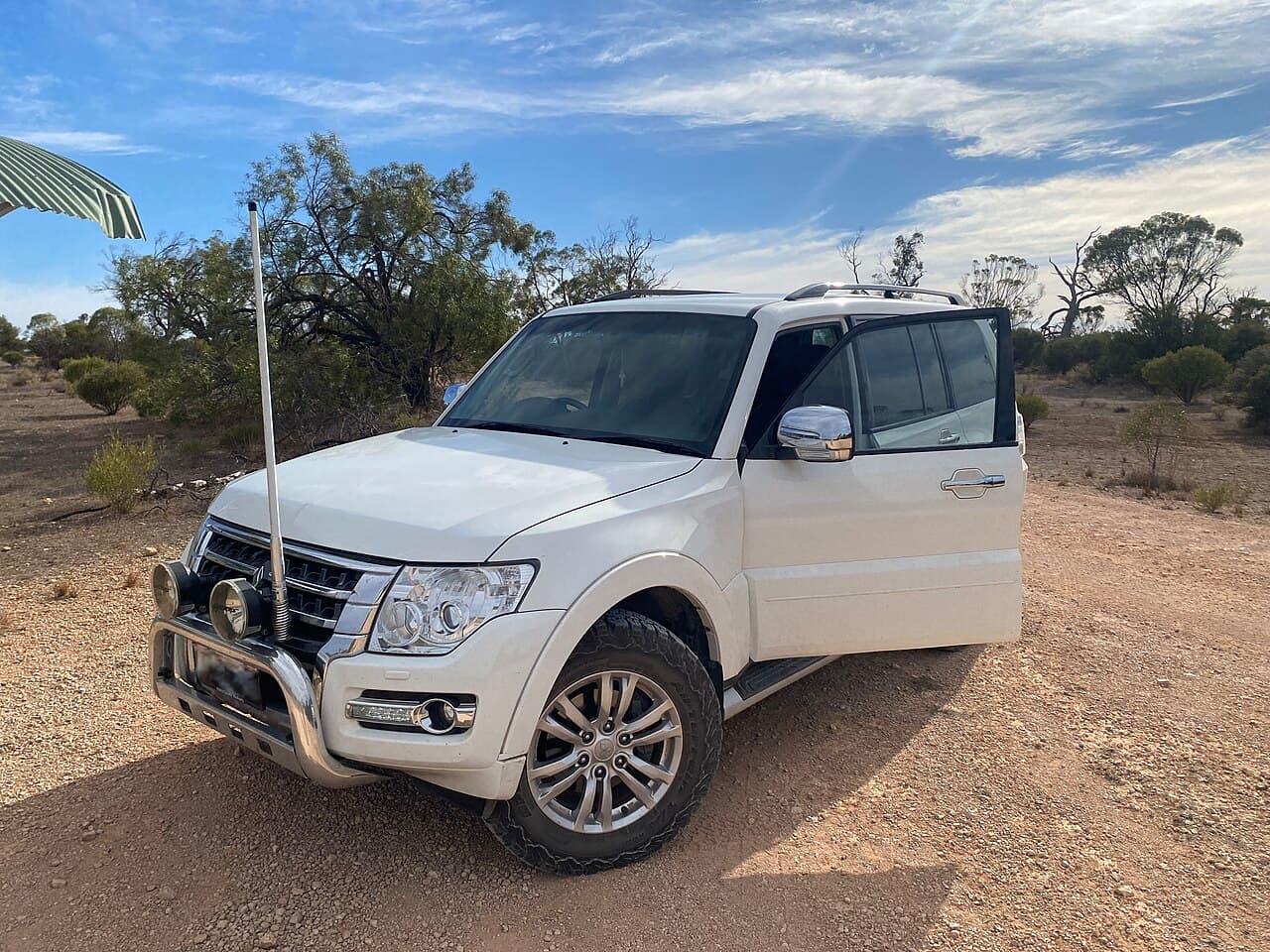
Mitsubishi Pajero NX, Brookfield — RegionVisitor90, Wikimedia Commons, CC0.
The Pajero is a historical Australian touring wagon: family seats, a lockable interior, and years of Cape and High Country weeks. Now it is an honest used-object inspection.
A Mitsubishi Pajero in Australia is a historical touring wagon — family seats and a lockable interior that already did Cape, High Country, and beach-access years — now an ageing used-market inspection, not a forgotten joke or a ranked classic. Inspect rust, cooling, bushes, and recovery points on the example. Confirm manufacturer limits and a parks page. We do not invent prices or a #1 generation.
Wagon
Family tourer
Used
Ageing examples
Inspect
Not a eulogy
Historical, not mythical
For a stretch of Australian family touring, the Pajero was a common answer to “we need seats, a lockable interior, and low range for the week we actually take”. People did the High Country, the Cape in the dry, beach accesses, and inland formed roads in them without waiting for a 70-series myth. That history is why this leaf exists.
It is not a dare to buy a tired example because a magazine once liked one. It is not a funeral because the badge is quieter in new-car talk. It is a used wagon with kilometres, independent-front conversations, and an interior that has probably been a camper.
We will not invent a generation as “the one”. NM, NP, NS and later wagons are names you will see in classifieds; treat them as ages and equipment, not as a podium. Ask the job: who sits in the back, what must stay dry, and whether the example has been loved as a tourer or neglected as a suburb daily.
What a touring wagon still is
A wagon is not a tray. That is the point. Recovery boards, a fridge, and a week of clothes live behind a door instead of a canopy latch. Dust paths are different. Seats are the product. If you wanted a tray, read Hilux, Ranger, Colorado, or a 79 on the LandCruiser leaf. If you wanted a short-wheelbase rock conversation, read Wrangler. Stay here if the job is a family week on formed roads and park tracks.
Independent front suspension and Mitsubishi’s part-time or full-time 4WD systems (people will say Super Select in the driveway) change how you inspect the front end and how you talk to a fitter. They do not settle a desert. We will not declare them better or worse than a live axle. We will say: drive a corrugated road, listen for clunks, and treat a lift as a conversation with documentation — not a personality.
Corrugations, dust, and an ageing tourer
A Pajero that has already done Australian kilometres has already met washboard. Ask what the bushes, shocks, and steering feel like after a formed dirt road, not only after a car park. Ask where dust enters. Ask whether the rear seats still fold and latch after a life as a camper.
Cooling on a long climb is a used-wagon question. So is rust in coastal and High Country wet. So is an interior that has had a fridge slide bolted through a floor that was not shown that job in a brochure. None of those sentences is a death sentence. All of them are inspection.
Tyre pressures remain a visor card. Outback driving remains a turn-around. Travel remains seasons and parks. A historical tourer can still drown in a hole you did not walk.
Skills still outrank nostalgia
Rated recovery points and a spectator brief are not optional because the wagon once looked respectable in a Cape car park — recovery basics. A tow ball is still not a recovery point. A winch you have never used is still jewellery.
Tread lightly is still driving. A Pajero on a formed track can still cut a corner and birth a washout. Read the guides hub as if the badge were new.
Used-buy inspection without a eulogy
See it cold in daylight. Look at:
- Service records you can read, including timing-belt or chain conversations the seller should be able to talk about without theatre. We will not invent an interval; confirm the manufacturer documentation for the exact engine.
- Rust in sills, rear quarters, and under plastic that a sidestep hides.
- Front-end bushes, driveshafts, and leaks after you imagine chatter.
- Cooling, hoses, and a gauge on a hill.
- Interior fasteners where a camper life has drilled extra holes.
- Recovery points that are stamped for recovery.
Then buying used. We do not invent an asking price. We do not call a year a classic as a sales tactic. A pre-purchase inspection from someone who is not selling the vehicle is the adult in the room. We are not that adult.
Parts access is a town question, as it is for every ageing platform. Telephone the independent you would actually use. A shrug is information. A habit is information. A forum panic is not a specification.
Beside Cruiser, Patrol, and the dual-cabs
People will compare a Pajero to an 80 or 100 because both are wagons that toured. That comparison is seats, rust, and the example — not a badge religion. People will compare it to a Patrol GU wagon for the same reason. People will compare it to a dual-cab when they wanted a tray all along.
Do not steal the Hilux “enough” sentence as nostalgia. A Pajero on formed roads with a calm driver is often plenty, the same way a Hilux is. Skills and the park page still win. The vehicles hub is the index. Vehicles and mods is the messy version.
How to talk about Pajeros on the board
On the forum, post what the wagon actually did: dust paths, a cooling climb, a High Country shoulder, a beach access. Link this leaf so the next family is not starting from a joke or a halo. Point at buying used if money is mentioned — without the number. Point at the guides if the thread is actually recovery or pressure.
A useful Pajero paragraph treats the platform as a historical touring wagon that still has to pass Tuesday. That is respect. It is not a museum card.
Touring wagon then versus used wagon now
| Feature | The historical job | The used-market job |
|---|---|---|
| Seats | Family week, lockable interior. | Do those seats still latch after a camper life. |
| Country | Cape dry, High Country, beach access. | Same country, ageing bushes and rust. |
| Talk | A common tourer, not a secret. | Inspect, do not eulogise or mock. |
| Skills | Always required. | Still required. The badge is quieter, not wiser. |
Keep reading
Questions people actually ask
Is a Pajero a good Australian touring wagon?+
It is a historical touring wagon that did family kilometres on formed roads and park tracks — now an ageing used example you must inspect. It is not a forgotten joke and not a ranked classic.
Which Pajero generation should I buy?+
We do not rank a generation. Treat NM, NP, NS and later names as age and equipment, then inspect rust, cooling, bushes, and records on the example in front of you.
Pajero or LandCruiser wagon?+
Compare seats, the used example, and parts access in your town — not a badge religion. The LandCruiser leaf is the wagon-and-ute conversation; this leaf is the historical family tourer.
What should I inspect on a used Pajero?+
See it cold, look for rust and camper drill-holes, drive chatter if you can, ask about service the seller can actually describe, and confirm recovery points. Use the buying-used spine; no invented prices.
Inspect the wagon. Skip the eulogy.
Post Pajero weeks as dust, cooling, and seats — the historical tourer, still a Tuesday vehicle. Leave prices off the thread.